accessories

Backdoor in Linksys and Netgear routers - Hacking

router

This news could hurt the reputation of both companies. A passionate (and obviously very competent) reverse-engineer from France, Eloi Vanderbeken forgot the admin interface password of his router and so he just wanted to have fun accessing the administration side and that’s when he discovered a backdoor in his Linksys WAG200G router. After publishing this discovery on Github, other users have confirmed its existence in at least three other routers:
  • Netgear DM111Pv2
  • Linksys WAG320N
  • Linksys WAG54G2
Other routers are suspected of providing equal opportunity to obtain the administrator password through the 32764 port, but it has not yet been confirmed:
  • Netgear DG934
  • Netgear DG834
  • Netgear WPNT834
  • Netgear DG834G
  • Netgear WG602
  • Netgear WGR614
  • Netgear DGN2000
  • Linksys WAG120N
  • Linksys WAG160N
  • Linksys WRVS4400N

    Read more. . .

Solar cell


solar plant
If you want to know about Solar cell then you are exactly in right place. Here is the information about Solar cell. It is also explained in diagram. It is also known as photovoltaic cell.


solar cell
It is an electrical device that converts the energy of light directly into electricity by the photovoltaic effect. It is a form of photoelectric cell (in that its electrical characteristics-- e.g. current, voltage, or resistance- vary when light is incident upon it) which, when exposed to light, can generate and support an electric current without being attached to any external voltage source.

Here is the video about solar cell...

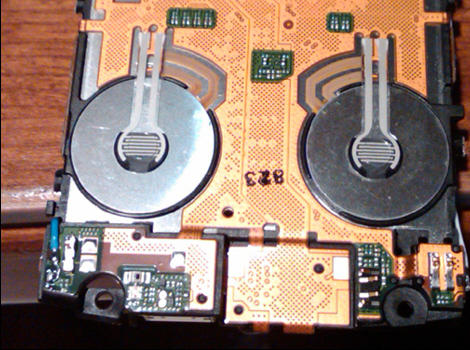
teardown screen of BlackBerry Storm click

blackberry storm
Article Source: www.hackaday.com

Here is a great information about teardown screen of BlackBerry Storm click welcome to my blog read the article and enjoy.
Photos of the BlackBerry Storm 2, both inside and out, have been leaked. Engadget provides us with the specifics, going into detail about the four large piezoelectric pressure sensors that sit underneath the screen. It looks as though the screen will still function as a button, just without the physical movement of the previous model that received mixed reviews. For a better explanation of the technology behind the phone’s innovative screen, here’s a video describing it in more detail and a writeup over at the CrackBerry forums.

Article Source: www.hackaday.com

Make Easy to use auto QR code generator

custom qr generator code
Article Source: www.hackaday.com

Here is a great information about Making Easy to use auto QR code generator welcome to my blog read the article and enjoy...
Love them or hate them, plenty of people around the world use QR codes on a daily basis. Since he thinks they’re pretty great, Hackaday reader  falldeaf thought it would be cool to put together an automatic QR code generator to be used on web sites.
Inspired by the custom QR logo embedding work done by our own [Brian Benchoff], his dynamic QR code generator allows you to do the same thing, but with far less work. The code requires that you have PHP and the GD library installed on your server, but other than that his code does the rest.
All you need to do is call up the page and pass along a URL, optional caption text, optional image overlay (to add your logo to the center of the code), as well as an optional hash code for tracking traffic sources. The page spits out a png image that can be used on its own, or embedded in a blog, which is what [falldeaf] plans on using it for.
If QR codes are your thing, be sure to grab a copy of his code, it will certainly be a handy tool to have around.

Cellphone microscope price

mobile microscope
Article Source: www.Techlocation.com

Here is a great information about Cellphone microscope price welcome to my blog read the article and enjoy...

Medical-grade microscope photography for $20 might be a game changer in areas where medical services are unavailable. This particular hack uses an iPhone’s 2 megapixel camera, as well as a tiny glass marble, to magnify a sample to about 350 times its actual size. The two images seen on the left are red blood cells photographed with the improvised microscope. The main issue with this magnification method is a very thin plane of focus that is overcome with processing in software.
This makes us think of the microscope hack that shined a laser through a droplet of water, to project the image on a wall. The concept was later refined to work with samples on glass slides. There are a couple of distinct advantages to using this cellphone-based method. First, the sample can be seen with its true colors. Second, you not only magnify the sample, but you have a digitized image already on a device that connects to the Internet. If you’re trying to make a medical diagnosis this can easily be sent to a qualified professional for analysis.
The team that came up with this technique also figured out how to build a cellphone-based spectrometer for just a few bucks. The image in the upper right is the result of that hack. Both have a step-by-step build guide on the page linked at the top. The microscope is just a glass bead in a piece of rubber, as seen here. The spectrometer is a bit more involved.

Recording of 3D Video in 3D


If you want to know about Recording of 3D Video in 3D then you are exactly in right place. Here is the information about Recording of 3D Video in 3D.
Legalities of doing something like this aside, this concept by [MadSci labs] gives some insight into how one would go about recording a 3D movie in 3D.  Probably many of you have wondered if this could be done, but they took it one step further and actually made a device capable of doing just that.
evo3 shooting
MadSci labs solution involved taking some 3D glasses home from a theater, cutting them to size, and taping them to a HTC EVO 3D phone.  Each lens piece was taped over a different camera lens to separate out the two 3D elements needed to produce a stereoscopic image. Their experiment was successful, however some loss of quality was experienced.  Because of this, we’re not expecting to see a lot of in-theater movies pirated this way, but given a more professional-quality build, you never know what will happen.
You can see the “results” of their experiment after the break. As it’s not in 3D, it should give you an idea of what is going on.

Smartphone Dock for Arm


Here is a great information about Smartphone Dock for Arm welcome to my blog read the article and enjoy.
Why not that is, if you have a prosthetic arm. Although it’s hard to believe we haven’t seen this before, [Trevor Prideaux], according to [The Telegraph's] article, “has become the world’s first ever patient to have a smartphone docking system built into his prosthetic arm.”
[Trevor] was born without a forearm, and, as he puts it, he’s used to adapting to things.  However, he thought others might be struggling with the same problem, especially those that become disabled later in life. Once their help was secured, Nokia and the Exeter Mobility Centre got to work on his new limb and produced a prototype in five weeks!
smartphone dock for arm
[Trevor] is quite pleased with his new phone docking system. Texting especially is much easier and safer, and the phone can be removed when needed for making calls. We love to see hacks like this where people enhance their abilities using technology! For another hack helping those with disabilities, check out this wheelchair elevator/winch made for a non-accessible apartment.

Panasonic Viera GT25 HD 3D Plasma TV

The new Panasonic Viera GT25, a Plasma Full HD 3D technology that is proposed in sizes from 42 to 50 inches. the GT25 also works as Web TV, USB connectivity, ability to insert a Wi-Fi adapter or an external keyboard and web widgets (YouTube, Picasa, Bloomberg, Twitter, Weather, Pandora and Amazon video on demand). Even special glasses for 3D design showing a reduced frame that could be appreciated by those who wear glasses.

All this at a price of $ 1.699.95 and 2.099.95 for the smallest to the largest U.S. dollars, figures that Italy could become 1700 and 2100 € approx. Price, therefore, affordable and not excessive in comparison with the new LED, much more expensive for the technological innovations that lead.

Logitech K800 Wireless Backlit Keyboard

Logitech K800 is a keyboard with backlit keys. With a light sensor, the keypad includes the amount of light intensity to give the keys and a proximity sensor turns off the light where lean hands to consume less battery. The internal battery, in fact, allows an autonomy of 10 days and includes a USB charging system. The keyboard is wireless 2.4 GHz is bought in stores for € 99.99.

Canon Selphy CP800 Compact Printer

Samsung S2 is an external hard disk with a memory of 320 or 640 GB. With a speed of 7200 RPM, supports USB 3.0 to exchange data with your computer up to 5 Gbps. That is to say that reading and writing will be equal to the hard drive of your computer if not more. With Dynamic Balancing the vibrations will be minimal while SilentSeek and NoiseGuard technologies will make it extremely quiet. Sales will start next month at a price not disclosed.

Canon Selphy CP800 Compact Printer

The new Canon Selphy CP800 is a limited size compact printer that can print a photo in 47 seconds directly from a memory card. Inside is a rechargeable battery for use at any time. With LCD display 2.5″ you can correct the exposure and color before printing.

Pity that the company did not provide data on the quantity of photos printed with the ink base. It would be useful to calculate the cost of a single print. The printer will be on sale for $ 99.99, about 79 €.

Casio XJ-A245 Environment Friendly Projector

The Casio XJ-A245 is a projector with a new hybrid Laser & LED light source with a lifetime of 8 times higher than other similar projectors on the market. The most important is the total absence of mercury in it, so as to be an environment friendly product that can dramatically reduce the TCO (Total Cost of Ownership) which contributes to the welfare of society.

Besides having a lifespan significantly higher (the lamp is guaranteed 20,000 hours) among its features are a maximum resolution of 1280 x 800 pixels, 1800:1 contrast, a light output of 2,500 ANSI lumens, HDMI connections and USB
opportunity to connect inWLAN and a maximum projection of 60″ screen. Pricing and availability have not yet been disclosed.

LaCie 2big USB 3.0 Drive with RAID

LaCie released the 2big USB 3.0 as the first ever external drive to combine both RAID and the faster USB interface. The two-drive enclosure can run as JBOD (just a bunch of disks) or in a RAID 1 mirror for security but excels when put into a RAID 0 stripe for speed. At a peak 205MB per second, the stripe is faster than even a FireWire 800 or eSATA drive and can transfer large volumes of data in record time; LaCie claims a dual-layer 50GB Blu-ray could copy in under five minutes.

Following suit with most USB 3.0 peripherals, the 2big is backwards-compatible with USB 2.0 and will run at its slower speeds with older hardware. Choosing to mirror gives the option of backing up the external drive with LaCie Backup on both Macs and Windows PCs. Both drives are modular and can be swapped out with generic replacements if capacity needs go up or if a drive fails.
Two capacities are available from the outset, including a 2TB version for $350 and a 4TB model at $580. Both should be ready today and are being joined by the d2 USB 3.0, a single drive unit with speeds up to 130MB per second and capacities of either 1TB for $150 or 2TB for $250.

Lenovo Power Hub: The Power Supply with Integrated USB Hub

Notebook computers typically do not have many USB ports and it is sometimes necessary to use an external hub to connect all the devices we need. Lenovo has brilliantly solved the problem by creating Power Hub, the first notebook adapter that also integrates a USB hub, thus reducing the number of devices to carry around your laptop.

The power supply is compatible with the ThinkPad 65W or 90W-powered and has 4 USB ports, one for charging electronic devices such as phones or iPods and other three used to connect peripherals to your notebook. Power Hub is available for sale in Lenovo’s online store at $ 74.99, about 59 €.

Kingston DataTraveler Ultimate 3.0 – 64 GB Flash Drive

Kingston DataTraveler Ultimate 3.0. is the first USB 3.0 flash drives. USB 3.0 technology allows high speed data transfer card guaranteed to 80 MB / sec read and 60 MB / sec write, according to tests carried out from Kingston, this pen drive make it possible to transfer a movie to 3.9 GB in 1 minute and 13 seconds (from PC to flash memory).

The new DataTraveler Ultimate 3.0 is backward compatible with USB 2.0 Y cable supplied. The available storage capacity is 16 GB, 32 GB and 64 GB of space needs for very high. The Kingston DataTraveler Ultimate 3.0 will be available by late September, prices range from 74 euro for the 16GB version for 212 euro for the 64GB version.

Toshiba Canvio Basics External Hard Drives

Toshiba has introduced a new series of external hard drives with no extra features, designed only to represent simple and effective storage solutions additions. Toshiba Cavio Basics consists of three models of 320 GB, 500 GB and 750 GB with USB 2.0 , in contrast with all the latest in hard drive with USB 3.0.

2.5-inch drives are equipped with internal shock sensor and ramp loading technology, also confirmed his intention devoted to the design simplicity: three external hard drives are in fact only available with glossy black finish, linear but engaging. Although prices seem to be in line: $ 80 for 320 GB version, $ 100 for the 500 GB version and $ 120 for the version 750 GB.

Elecom MR-A005-A006 Universal Card Reader

Elecom has proposed two new USB card reader, the MR-A005 and MR-A006, which also support the first SDXC. The MR-A005 model supports 46 different types of cards, while the MR-A006 model supports it well 47. Elecom also ensures that its predecessors, the two new models are 20% faster when writing to CompactFlash and 10% faster to write to SDHC.

Compact dimensions (83 × 58.5 × 15mm), lightweight (50 g), four colors (including a sparkling red) and money equivalent to 25 euros, round off the features of these devices and yet to find one who has all but 47 memory cards supported.

Toshiba GL Series Glasses-Free 3D TV

Toshiba will be the first company to bring a glasses-free 3D TV to market. The launch is planned for late December and in Japan only. Two initial models, the 20-inch Toshiba 20GL1 and 12-inch Toshiba 12GL1, both will be based on the parallax barrier approach found in the Nintendo 3DS. The approach requires that viewers sit in sweet spots but is more comfortable over long periods and cheaper for multiple viewers.

The 20-inch model will be powered by a custom Cell processor, similar to that used in Sony’s PS3 and which was co-developed by Toshiba in conjunction with Sony and IBM. Its 20-inch 720p display is LED backlit and will also play 2D images. For maximum effect, viewers must sit back at least 2.95 feet away from the screen. It will incorporate a range of ports including CEC-capable HDMI, USB and Ethernet.

The 12-inch model drops the Cell processor, as its lower 466×350 resolution doesn’t require the same level of processing power to deliver the same effect. Optimal viewing is achieved from a minimum distance of 2.13 feet. It’s also equipped with LED backlighting and similar ports but can double as a photo frame, accepting SD cards loaded with JPEG images. The SD card can also play AVCHD files, and the TV can tune in 1Seg over-the-air TV when in Japan.
The 20-inch will retail for the equivalent of $2,900 and the 12-inch for $1,450. International pricing and availability has yet to be announced.

SADI Book Printer Innovative Design

Th Book Printer is  a compact and portable device as well as iconic captivating book form designed by SADI. That measures same as a closed form 50 x 257 x 182 mm; after opening he printer can comfortably accommodate the printed sheets and to print.

Book Printer of the SADI would work via Bluetooth with compatible devices, so even without the clutter of wires (can be seen, however, a USB port). It would be nice to see it on the market soon with an attractive price as its design.
Book Printer Images

Toshiba STOR.E ART 4 External HDD with USB 3.0

Toshiba added a new storage devices to its external HDD, the new external hard drived Toshiba STOR.E ART 4 has a very glossy black finish and USB 3.0 interface connection. The STOR.E ART 4 is a shock proof device and comes with an application software NTI BackupNow EZ, which allows the user to backup all information with just one click and to protect it by incorporating 256-bit encryption algorithm.

Toshiba STOR.E ART 4 coming in three different models, a 500 GB model in red color, 750GB in blue color and 1TB in white color. All three devices will be available later this year in affordable price.

Back to Top